Understanding which SPF level to use based on skin tone is essential for effective sun protection. Different skin tones react differently to UV rays. Knowing your skin tone helps in choosing the right sunscreen for optimal safety. This guide covers skin tones, SPF importance, recommendations, and application tips for stronger protection.
Key Takeaways
- Understanding your skin tone is crucial for selecting the appropriate SPF level for effective sun protection.
- Use at least SPF 30 for very light skin (Type I) and SPF 15 for medium to dark skin tones to reduce the risk of UV damage.
- Broad-spectrum sunscreens offer protection from both UVA and UVB rays, making them ideal for any skin type.
- Always reapply sunscreen every two hours, especially after swimming or sweating, to maintain optimal protection.
- Choose sunscreens suitable for your skin type: gels for oily skin and creams for dry skin enhance application effectiveness.
Understanding Skin Tones
Skin tones vary widely among individuals. They range from very fair to deep brown or black. The Fitzpatrick scale helps categorize skin types based on how they react to sun exposure.
- Type I: Very light skin, often burns and does not tan.
- Type II: Light skin, burns easily, tans minimally.
- Type III: Medium skin, burns moderately, tans to a golden color.
- Type IV: Olive skin, rarely burns, tans easily.
- Type V: Brown skin, very rarely burns, tans darkly.
- Type VI: Dark brown or black skin, never burns, deeply pigmented.
Understanding skin tones aids in selecting a suitable SPF level and sunscreen routine.
Importance of SPF for Different Skin Types
Sun Protection Factor (SPF) measures how well a sunscreen can protect the skin from UV rays. Higher SPF values offer more protection. All skin types can suffer from UV damage, but the intensity of damage varies.
- Fair Skin: People with fair skin are at a higher risk of sunburn and skin cancer. They need at least SPF 30.
- Medium Skin: Those with medium skin should use at least SPF 15 to reduce the risk of burning and skin damage.
- Dark Skin: Darker skin tones have more melanin. Though they have some natural protection, they still benefit from using SPF 15 to prevent skin damage and other issues.
SPF Recommendations by Skin Tone
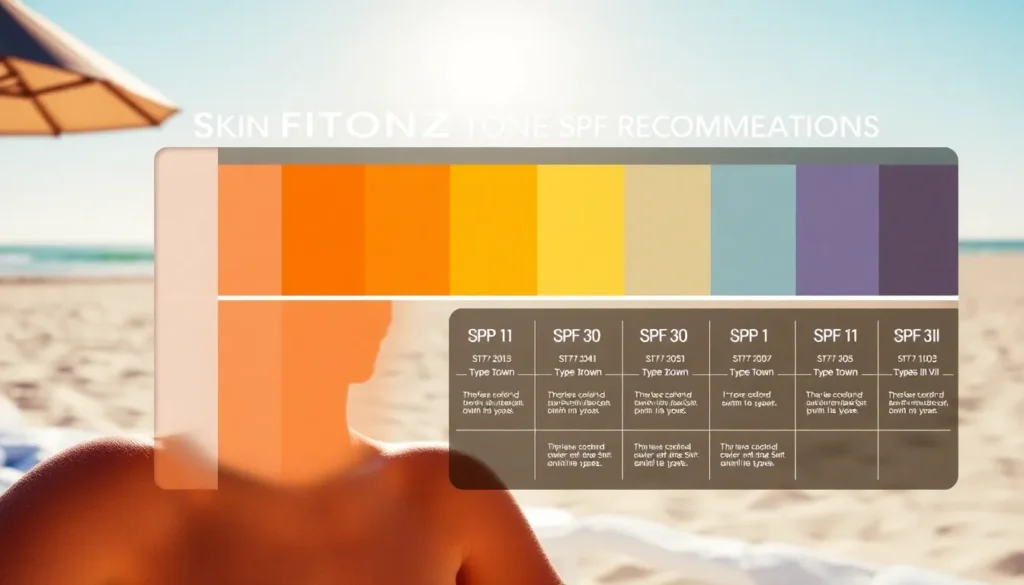
Here are the recommended SPF levels based on skin tone:
- Type I: SPF 30 or higher
- Type II: SPF 30
- Type III: SPF 15
- Type IV: SPF 15
- Type V: SPF 15
- Type VI: SPF 15 or higher
Increasing exposure to the sun may require higher SPF levels for any skin tone. It’s essential to reapply sunscreen every two hours, especially after swimming or sweating.
How to Choose the Right Sunscreen
When choosing sunscreen, consider the following factors:
- Broad Spectrum: Look for sunscreens labeled ‘broad spectrum.’ This means they protect against both UVA and UVB rays.
- Water Resistance: If swimming or sweating, opt for water-resistant options.
- Skin Type: For oily skin, choose gels or sprays. For dry skin, creams and lotions are best.
- Ingredients: Avoid sunscreens with parabens or fragrances if you have sensitive skin. Consider physical sunscreens with zinc oxide or titanium dioxide for better skin compatibility.
Application Tips for Maximum Protection
Proper application is crucial for sunscreen effectiveness. Follow these tips:
- Apply Generously: Use enough sunscreen. A nickel-sized amount for the face and a shot glass amount for the body is ideal.
- Apply Before Sun Exposure: Apply at least 15 minutes before going outside. This allows the product to absorb properly.
- Reapply Often: Reapply every two hours or immediately after swimming or sweating.