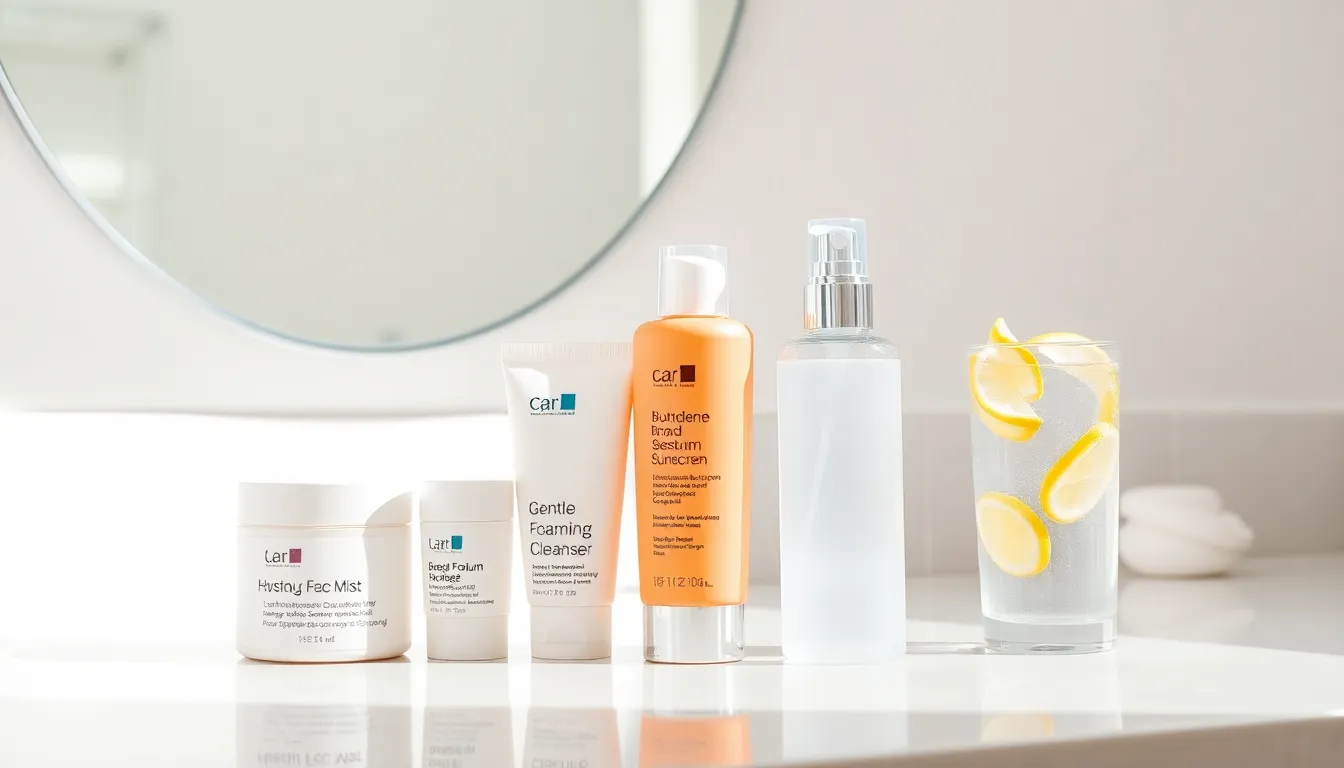

Creating a skincare routine can feel overwhelming, especially for beginners. Understanding the right steps is essential. This guide simplifies the process. It outlines the skincare routine order to promote healthy skin. Knowing how to care for skin helps achieve glowing results.
Key Takeaways
- Identifying your skin type is crucial for selecting the right products and establishing an effective skincare routine.
- Always follow the proper order of a skincare routine: cleanse, tone, moisturize, and protect with sunscreen during the day.
- Exfoliate 2-3 times a week to maintain smooth skin and promote cell regeneration without over-irritating your skin.
- Avoid common mistakes like skipping sunscreen and using too many products, which can overwhelm your skin.
- Regularly adapt your skincare routine to account for seasonal changes and evolving skin concerns to maintain healthy skin.
Understanding Your Skin Type
Before starting a skincare routine, it is important to know one’s skin type. Skin can be classified into four main categories:
- Oily Skin: This skin type has excess sebum production. Pores may appear larger. It often experiences acne or breakouts.
- Dry Skin: This type feels tight and may show flakiness. It can react to changes in weather and may require more hydration.
- Combination Skin: This type mixes oily and dry areas. Typically, the T-zone (forehead, nose, chin) is oily, while the cheeks are dry.
- Sensitive Skin: This skin type reacts easily to products, often showing redness or irritation. People with this type need gentle, non-irritating products.
Understanding one’s skin type helps choose suitable products and treatment. It sets the stage for an effective skincare routine.
Essential Steps in a Basic Skincare Routine
A basic skincare routine includes several essential steps. Following these steps in the correct order enhances effectiveness.
Morning Routine Essentials
- Cleansing: Start by washing the face with a gentle cleanser to remove oil and dirt from the night.
- Toning: Apply a toner to balance the skin’s pH. This step helps prep the skin for better product absorption.
- Moisturizing: Use a lightweight moisturizer suited to the skin type. This hydrates and keeps skin supple.
- Sunscreen: Always finish with sunscreen during the day. It protects the skin from harmful UV rays.
Evening Routine Essentials
- Cleansing: Cleanse again to remove makeup, dirt, and oils accumulated throughout the day.
- Exfoliation: Exfoliate 2-3 times a week to remove dead skin cells. This step keeps the skin smooth and helps new cells regenerate.
- Toning: Reapply toner to prepare the skin for further treatment.
- Serum: Apply a serum that suits individual skin concerns, such as hydration or anti-aging.
- Moisturizing: Use a heavier moisturizer at night. This helps repair the skin while sleeping.
Common Mistakes to Avoid
Beginners often make mistakes in their skincare routine. Awareness of these can lead to better skincare results.
- Skipping Sunscreen: Many forget this crucial step in the morning. Sunscreen prevents skin damage and aging.
- Over-exfoliating: This can damage the skin’s barrier. Stick to 2-3 times a week to avoid irritation.
- Using Too Many Products: Starting with too many products can overwhelm the skin. It’s best to start simple and gradually add new items as needed.
- Ignoring Ingredient Labels: Not checking for allergens or irritants can lead to breakouts or reactions. Always read ingredient lists.
Adapting Your Routine as You Progress
Over time, skin can change due to age, weather, diet, or other factors. Adapting the routine ensures continued skin health.
- Seasonal Changes: During winter, skin may need extra moisture. A thicker moisturizer can help. In summer, lighter products and higher SPF are essential.
- Aging: As people age, skin may require different serums or added hydration to combat dryness.
- Skin Concerns: New concerns, such as acne or sensitivity, can arise. Adjusting products helps address these issues. Consulting a dermatologist can provide tailored advice.